
Best site to compare hotel prices in 2026: method and sources
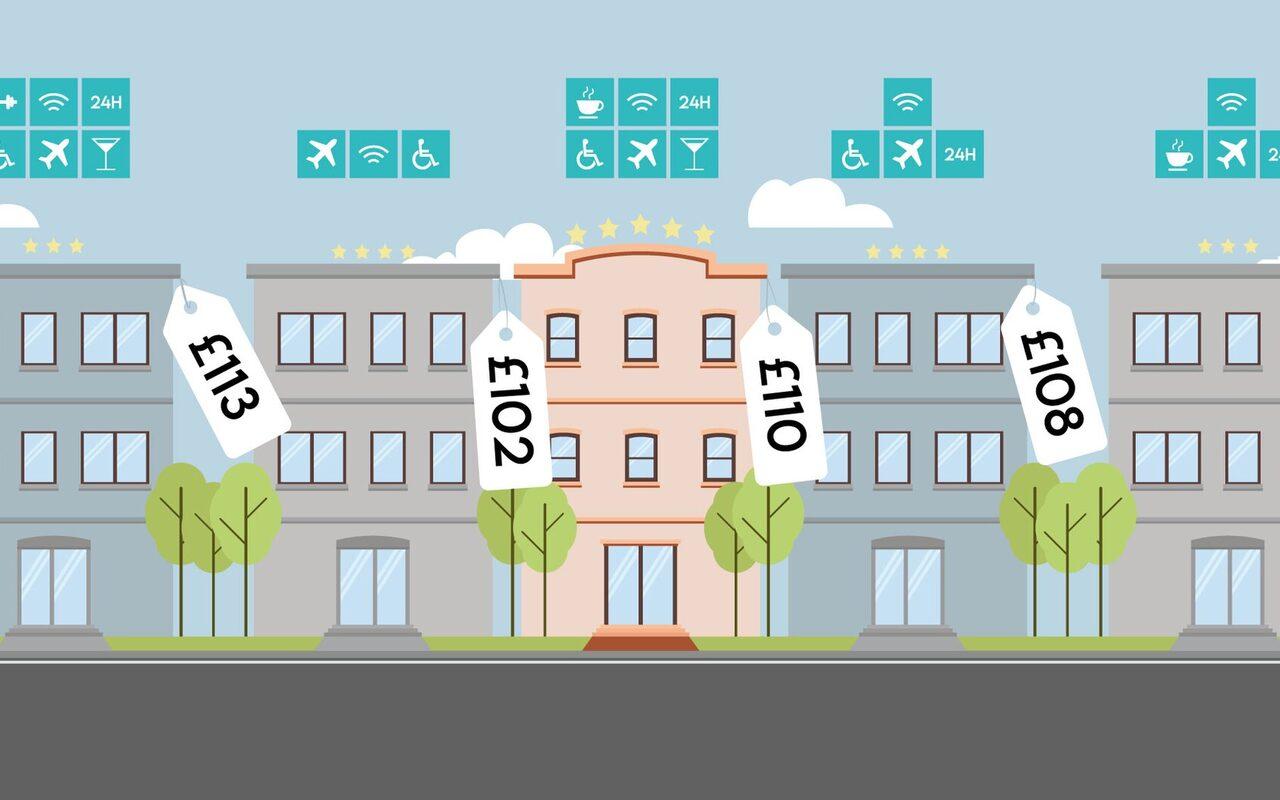
Photo : Familydestinationsguide.com Images (CC BY 2.0, Wikimedia Commons)
Comparing hotel prices in 2026 means trusting a site that shows a figure without always saying where it came from. This article compares the players that come up most often on the "best site to compare hotel prices" and "hotel booking sites" queries captured on 12 November 2026: Trivago, Kayak, Skyscanner, Tripadvisor, Reddit, not to mention CheckMeGo. The rule is the same as in our other comparisons — a dated search snapshot, only data published by identified sources, and no price, rating or review invented.
| Site | Best for | Strength | Limit |
|---|---|---|---|
| Trivago | Comparing hotel offers before booking | Hotel-only comparator showing a multi-site price comparison (snapshot of 13/11/2026) | Neither flights nor cars; authority split across country domains (audit, 2026) |
| Kayak | Comparing flights, hotels and cars in one place | Vertical meta-search with very long city guides (.ksp pages) | Traffic down 40.2% year on year (InstantDomainSearch, August 2026) |
| Skyscanner | Comparing flights before booking the hotel | 9% of French travel organic traffic (Eskimoz barometer, 2025) | No hotel traffic figure published in our audit |
| Tripadvisor | Reading traveller reviews before choosing | Present in the EN hotel SERP of 12/11/2026 | No in-depth analysis in our audit (search snapshot only) |
| Reading what travellers say in threads | UGC thread at number 2 on the FR "hotel comparison" query (13/11/2026) | Threads unreadable for us (403): no comparable data | |
| CheckMeGo | Selected hotels at real-time rates | Detailed listing pages, confirmation shown after payment | A tighter selection than the comparison giants |
What you will find: a summary table, our method, the comparison criteria, a look at each site, what the winning pages do today (a numbered testing protocol, tables), then concrete selection criteria. Traffic and authority figures are third-party tool estimates (Semrush, Ahrefs, DataForSEO) carrying their date: they describe the market, not the rate you will get on a given date.
Our method: a dated snapshot, verifiable sources
We captured search results on 12 November 2026 for the query "best site to compare hotel prices cheap hotel deals", as recorded in our competitive audit. The first page mixes comparators (trivago.com, kayak.com, skyscanner.com), a same-day booking site (hoteltonight.com), a forum (reddit.com) and editorial content (milesopedia, frommers). We then consulted the official pages of each service in November 2026 and used traffic data published by third-party tools with their date attached.
No booking test, no captured price for a given date and no rating is presented here: every claim is dated, sourced, and reproducible with your own searches. To repeat the snapshot: run the query in a private window, note the date, then open the official pages of the services quoted. That is also why every figure in this article carries its publication date.
What the 12 November 2026 SERP shows
On the English version of the query, our audit concludes that the results page is "weak and fragmented": Reddit threads, personal blogs, off-topic pages — no authority page really covers the query. That is exactly what makes this ground playable: the first page is not locked down by the large platforms. On the French side, the "hotel comparison" query shows a more regular mix: Skyscanner, a Reddit thread in second position, cozycozy, trivago and kayak.fr (snapshot of 13/11/2026).
The common denominator is this: on "comparison" queries, Google favours comparators and editorial or UGC content, not the large OTAs. In practice, a dated, documented article can appear on that first page where a classic booking page cannot — provided the method described above is kept and the snapshot updated.
The five criteria that really separate comparison sites
The first criterion is the total price, taxes included, for the same room on the same dates: a figure shown without taxes compares to nothing. The second: cancellation terms, readable before payment rather than after. The third: coverage — the cities, districts and dates actually available for your destination, which a comparator sometimes shows as an empty result without saying so.
Fourth criterion: how readable the reviews are, when any exist, and where they come from. Fifth: the comparison effort itself — the number of steps between your search and the moment you get a comparable figure, and how clearly what happens next is stated (address, dates, rate). Applied in the same order to every site, these five criteria make up our reading grid.
Trivago: the pure hotel comparator
Trivago only compares hotels: on its site you compare the offers of several sellers — the Paris page shows "Price for January across 8 sites" — then get redirected to the one that sells. The service offers neither flights nor car rental; that is its strategic choice, verifiable on its official pages (consulted in November 2026). Third-party estimates credit it with 3.3 million organic visits per month (Semrush, September 2026), about 19.5% of which come through its brand.
Two weaknesses documented in our audit: authority split across its many country domains (.fr, .de, .co.uk…) and a robots.txt that blocked some of its product pages (checked in November 2026). The site also states, in its legal notice, that its ranking combines site interest, price and advertiser compensation (snapshot of 13/11/2026): a detail to read before treating a ranking as a review.
Kayak: the vertical meta-search
Kayak does what Trivago does not: flights, hotels and cars in one place. It is a meta-search — results aggregate offers from other sites, and the booking is concluded with the seller. Published estimates give kayak.com 11.0 million organic visits per month (Semrush, September 2026), but a 40.2% year-on-year decline (InstantDomainSearch, August 2026) and first-page coverage for flight queries falling from 96% to 56% between December 2023 and September 2026 against Google Flights (PROS study, November 2026).
Kayak also bets on content: its Paris city page ("Cheap hotels in Paris from €43/night" in the title, snapshot of 13/11/2026) runs past 9,700 words and 595 internal links, while its hotels hub has around 2,280 words and 233 links. This is the "long utility pages" pattern our audit identifies as the most copyable: calculated content, updated with prices, rather than a frozen text.
Skyscanner, Tripadvisor and Reddit: the rest of the page
Skyscanner dominates the French landscape: 9% of French travel organic traffic (Eskimoz barometer, 2025), and a regular slot in the hotel snapshots of 12 and 13 November 2026, on both the French and the English side. Our audit has not published a traffic figure specific to its hotel business: we would rather write that than invent one.
Tripadvisor appears in the English SERP of 12 November 2026 without having been analysed in depth by us: we therefore do not rank it, we flag it. Reddit is a special case: its threads rank regularly (number 2 on the "hotel comparison" query in France, snapshot of 13/11/2026), but they returned 403 to us — we can neither read nor summarise them. All the more reason never to quote a forum review we could not verify.
What the winning pages do today
The anatomy of the ranking pages, captured on 13 November 2026, gives a clear method. Frommer's, number 1 on "hotel booking sites", publishes a numbered testing protocol: 56 booking scenarios across 6 cities, weighted points, an "Updated Oct 2026" mention and pros/cons — but only a breadcrumb in JSON-LD. Milesopedia, the French number 1 on "best site to book a hotel", lines up around 6,000 words, an update of 2 November 2026, more than six tables and an eight-question FAQPage.
Two lessons follow. First, the dated protocol is the differentiator — no mid-sized competitor shows one systematically. Second, the technical side can be beaten immediately, since full JSON-LD costs little. By contrast, top10.com, number 1 on "best flight comparison site", gets by on around 300 useful words: that is an exception linked to existing authority, not a model to copy.
CheckMeGo: real time and curation
CheckMeGo is a real-time hotel and flight booking platform: offers come live from suppliers, payment happens on the site and the confirmation is shown after payment. The site offers over 2.6 million hotels through its partners and publishes detailed listing pages for selected hotels, complemented by published city guides — Paris, London, Barcelona, Rome — and exists in fifteen languages.
Two choices set it apart from the comparators you are about to open after this article: a tight selection rather than an unlimited catalogue, and no ratings or reviews on the listings — every page shows the address, the location and the amenities declared by the property, with no averaged score. That is a transparency position: we display what is verifiable, nothing else, and we say so explicitly.
When to choose one site over another
To compare hotel offers only: Trivago. To compare flights, hotels and cars side by side: Kayak. To start from flights before booking the hotel: Skyscanner. To read what other travellers think: Reddit, keeping in mind that we could not read the threads quoted. For a stay already fixed on a precise date: a direct booking site, which shows its terms before payment.
One last rule, the same as in all our comparisons: do not pick a site on the strength of its brand, but on how many criteria it meets for YOUR specific case. The right site is the one that stays in the running to the end — that is, until the moment you see the total price, the cancellation terms and what is confirmed.
Which queries does this comparison target?
This article answers a family of "compare / best site" queries studied in our audit: "compare hotel prices" is estimated at 1,900 searches per month, "hotel booking sites" at 5,000, "hotel comparison site" at 900 and "best site to compare hotel prices" at 700. All are ranked medium difficulty in the audit, and these volumes are estimates published by third-party tools: they describe demand, not a traffic projection for this site.
The important point is not the volume but the nature of the results: a "weak and fragmented" first page on the main query, editorial and UGC strength on the neighbouring ones. In our audit that is precisely the profile of a query within reach of a documented, dated article — provided the method described above is kept and the snapshot updated regularly.
Frequently asked questions
What is the best site to compare hotel prices in 2026?
There is no single answer: it depends on what you are comparing. Hotel offers only: Trivago. Flights, hotels and cars side by side: Kayak. Flights first: Skyscanner. Reviews from other travellers: Reddit. Our method and sources are detailed above, dated 12 November 2026.
What is the difference between a comparison site and a booking site?
A comparison site (Trivago, Kayak) shows the offers available from several sellers and then redirects you to the one that sells: the booking is concluded with the seller. A booking site (Booking.com, Expedia, CheckMeGo) lets you complete the search, the payment and the confirmation on its own page. Verifiable on the official pages of each service, consulted in November 2026.
Trivago or Kayak: which should I use?
Trivago if your search is about the hotel alone — it is a hotel-only comparator, with neither flights nor cars. Kayak if you want flights, hotels and cars in one place. Both are meta-search services: the booking is concluded with the seller they redirect you to. Traffic figures are third-party estimates (Semrush, September 2026) with their date attached.
Do comparison sites show the final price?
Not necessarily: taxes, fees and cancellation terms vary from site to site. Before paying, compare the total price, taxes included, for the same room on the same dates, and read the cancellation terms. That is exactly the first criterion of our reading grid.
How can I check that a comparison site is trustworthy?
Three checks are enough: a stated method or update date on the page, a total price and cancellation terms displayed before payment, and recent reviews cross-checked across several sources. On CheckMeGo, no rating or review is displayed: listings are limited to the address, the location and the amenities declared by the property.
What is CheckMeGo?
CheckMeGo is a real-time hotel and flight booking platform: offers come live from suppliers, payment happens on the site and the confirmation is shown after payment. The site offers over 2.6 million hotels through its partners, publishes detailed listing pages for selected hotels and city guides, in fifteen languages.
Why is this comparison dated 12 November 2026?
Because rankings and offers change: dating every snapshot lets you repeat it. The SERP quoted was captured on 12 November 2026, the official pages were consulted in November 2026, and the traffic figures carry their publication date. No price, no rating and no booking test is presented in this article.